Found diary, modified (2025)
Artist’s Book
In May 2025 towards the end of my Masters degree, I displayed a series of typed-up excerpts from a personal diary on my studio wall as a proposed artwork. I had found the diary some months earlier on a residential street. A bruising critique ensued, with both my tutors and fellow students raising objections with varying degrees of affront at my proposition.
Compelling points were raised regarding both empathy for the diary’s author and my own lack of authorial input into the artwork. What would I say to the diarist if she came to an exhibition and saw her (thinly disguised) diary? Where was my voice in the work?
I eventually concluded that the only way I could use the diary at all would be if it was transformed beyond recognition. A purposeful act of destruction is entirely at odds with my habitual archival instinct to preserve found objects, however humble, like relics. However, destroy it, I did.
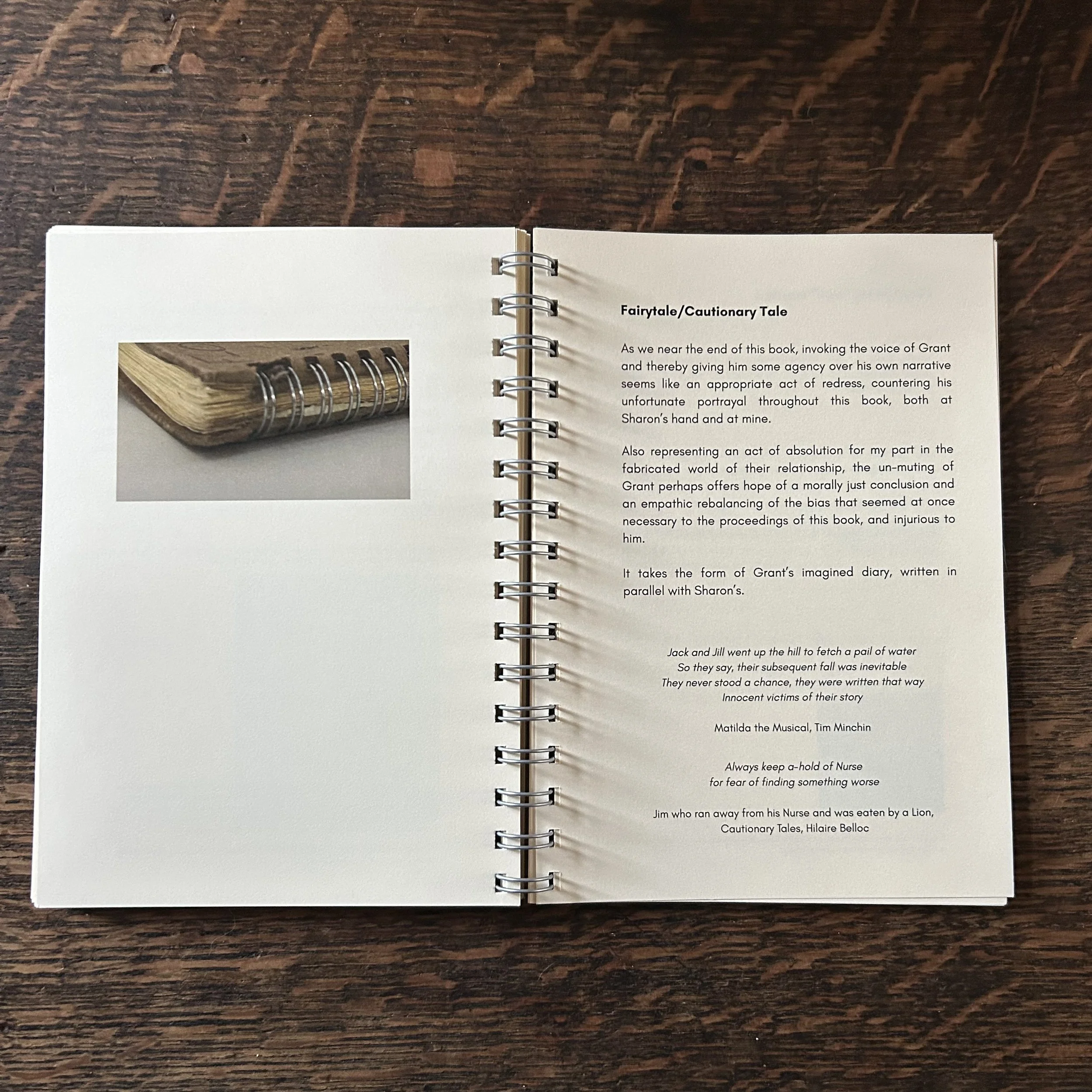
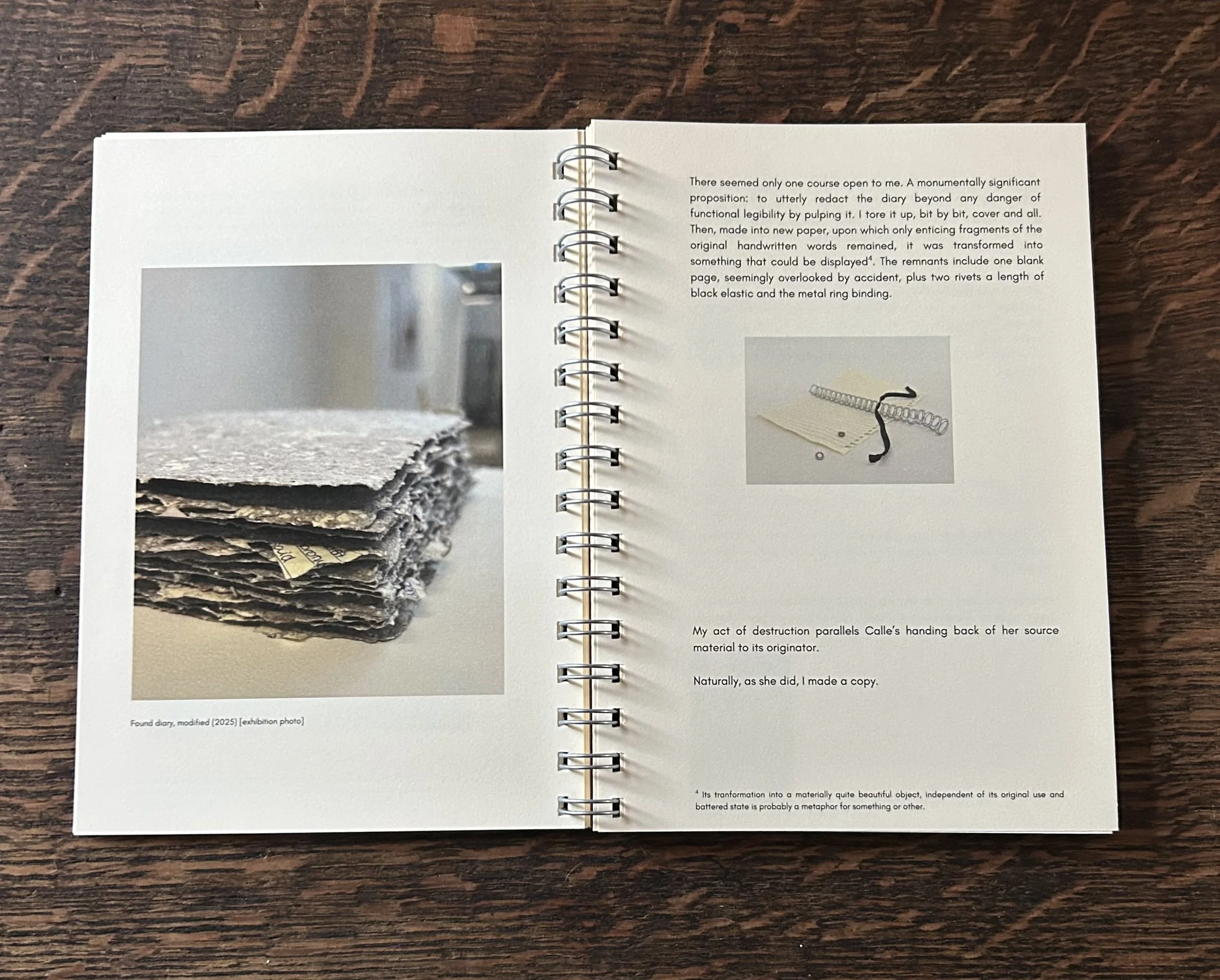
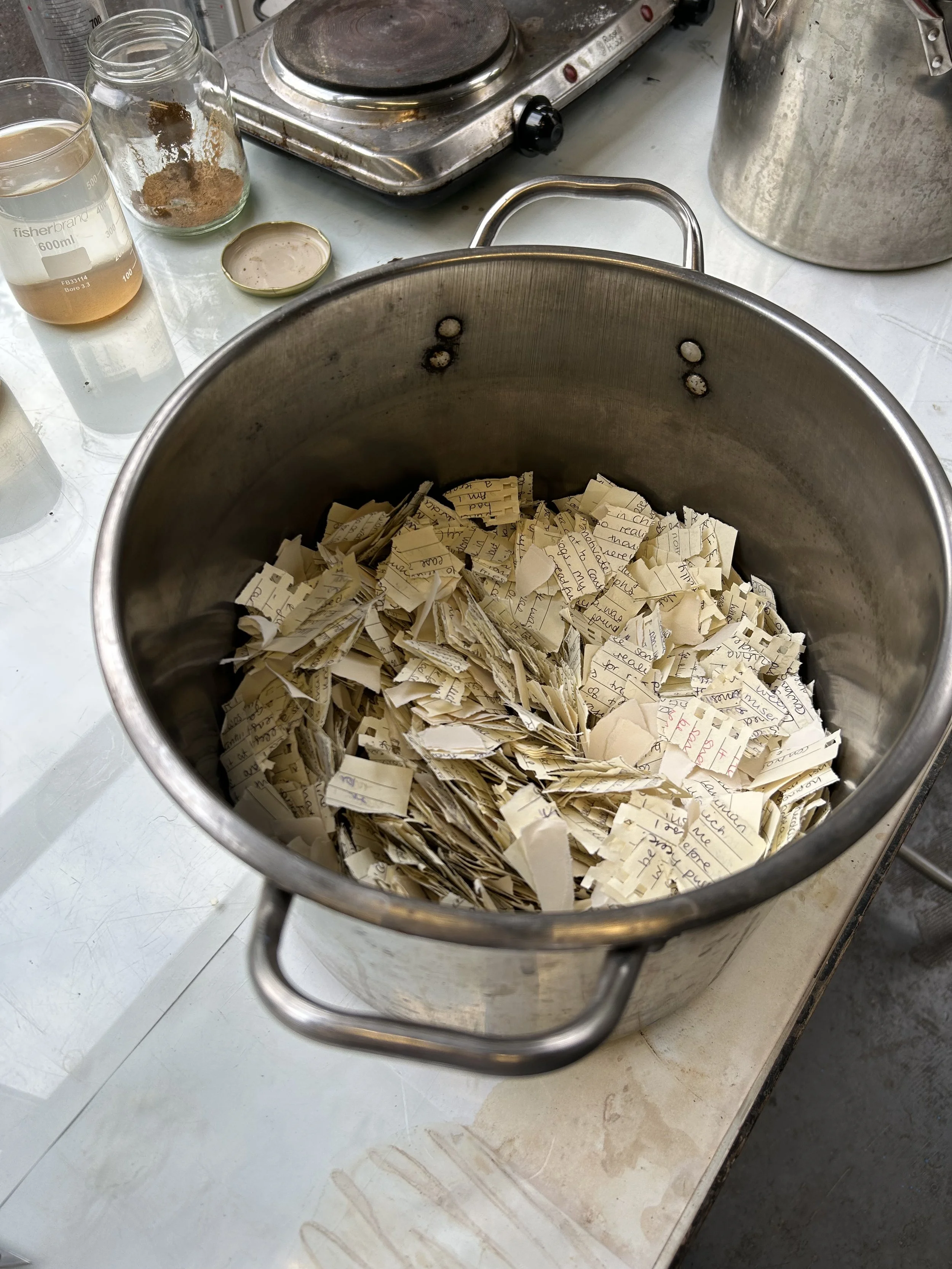
Pulping the entire thing and remaking it into “new” paper alleviated the immediate problem. No one could read it now, beyond tiny snippets of words still visible. As an intriguing and beautiful material thing, it fulfilled a useful function as a sculptural, plinth based object.
As an artwork, though, it felt incomplete - a shadow of its potential self. This propelled me into making an artist book, in an attempt both to seek resolution for the work, and to further explore how to expose the original object’s found-ness.
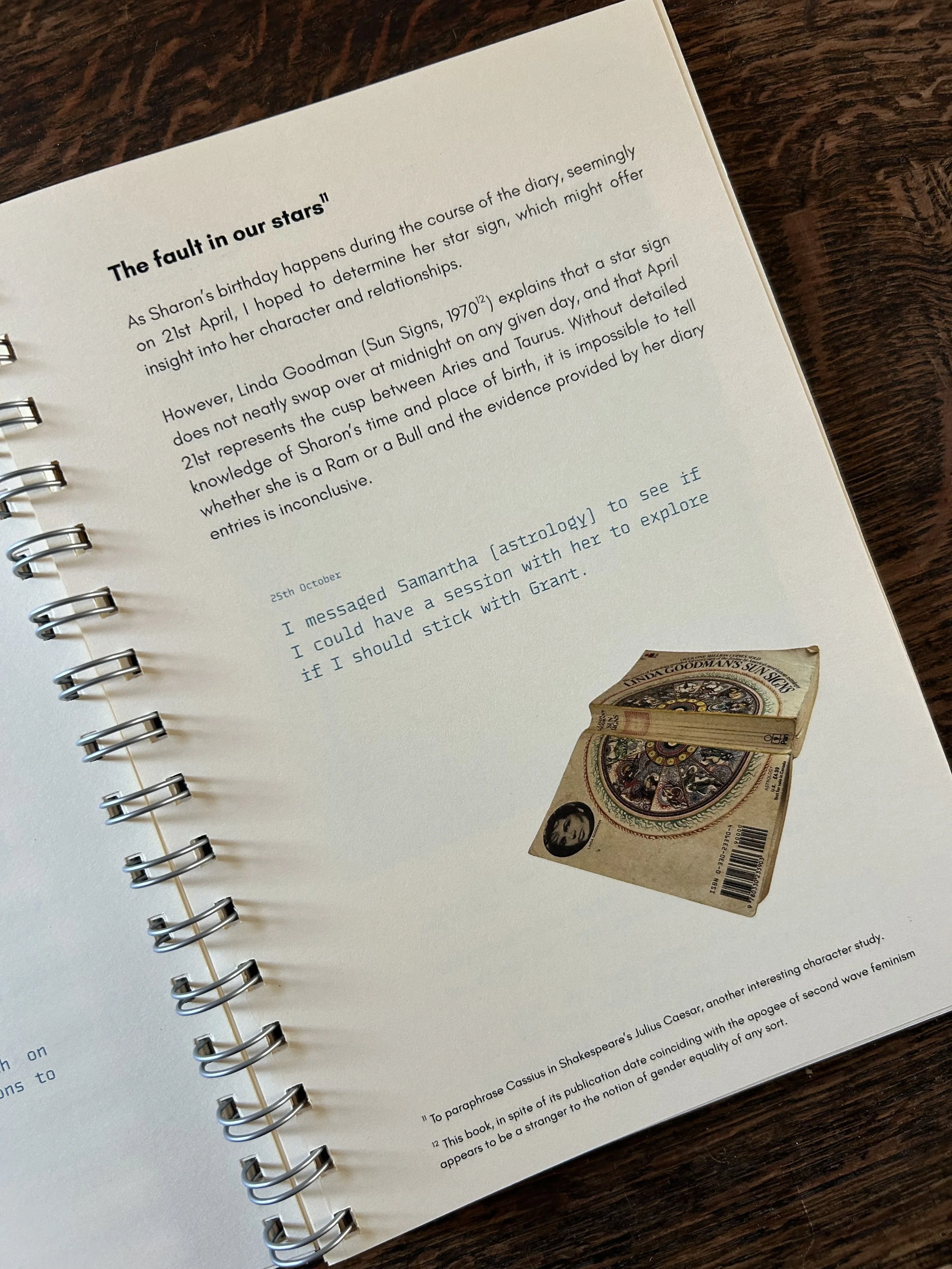
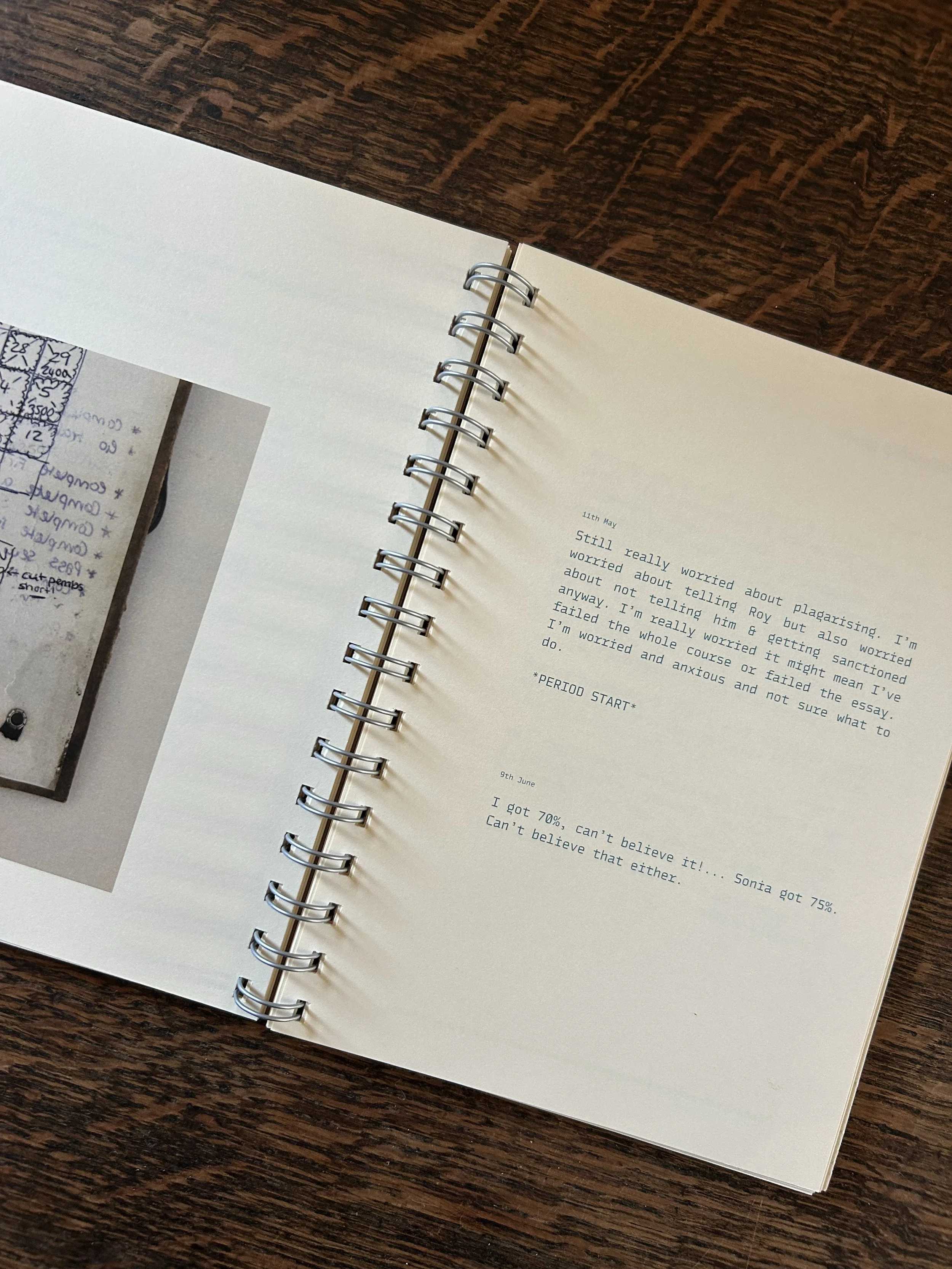
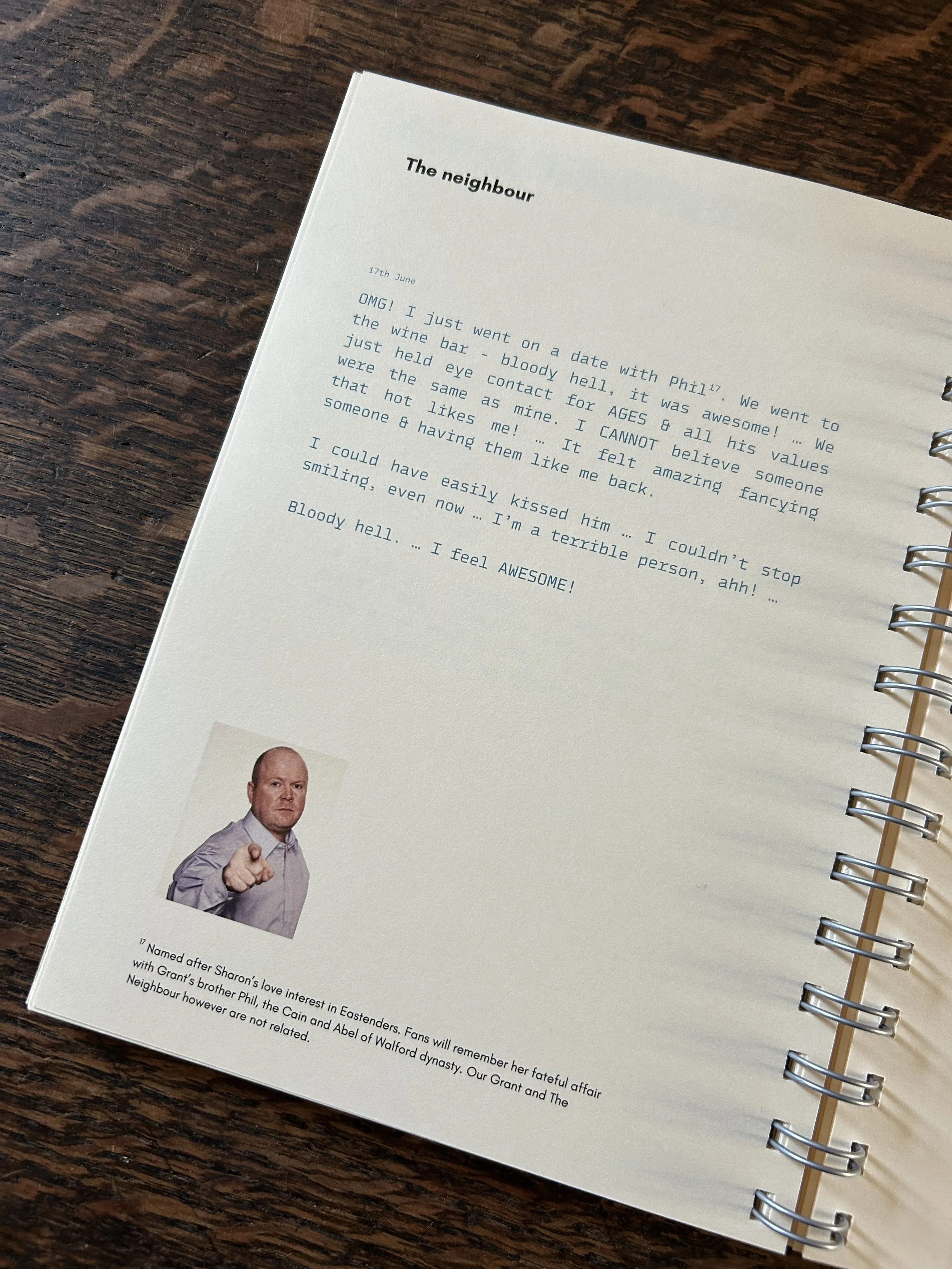
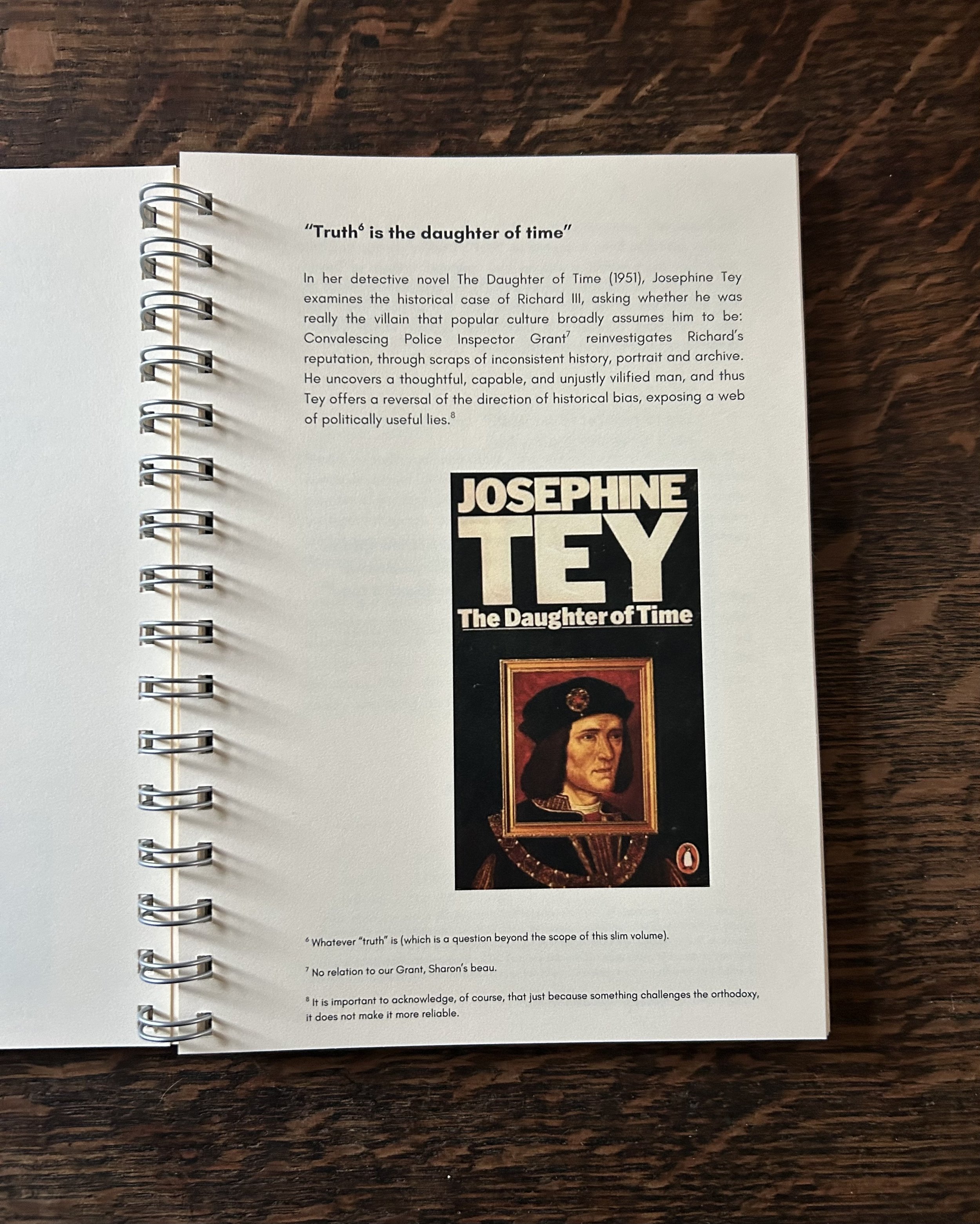
In making the book, I selected excerpts and pieced together evidence, creating a narrative arc, which attempts to portray the diarist. Partly poking fun, partly horrified, salacious and judgemental it is also at times poignant and empathetic. Art, literary and other cultural references emerged as tools to examine various aspects of the diarist’s persona (and, as it turned out, my own) together with themes surrounding both her life, contemporary life and surrounding diarists in general.
Echoing the work of French conceptual artist, Sophie Calle, this investigation-led creative narrative explores the morality of exploiting the private writings of an unwitting collaborator in an art work.